Emotional Homecoming: Space Crew Returns Safely After Record-Breaking Deep Space Journey
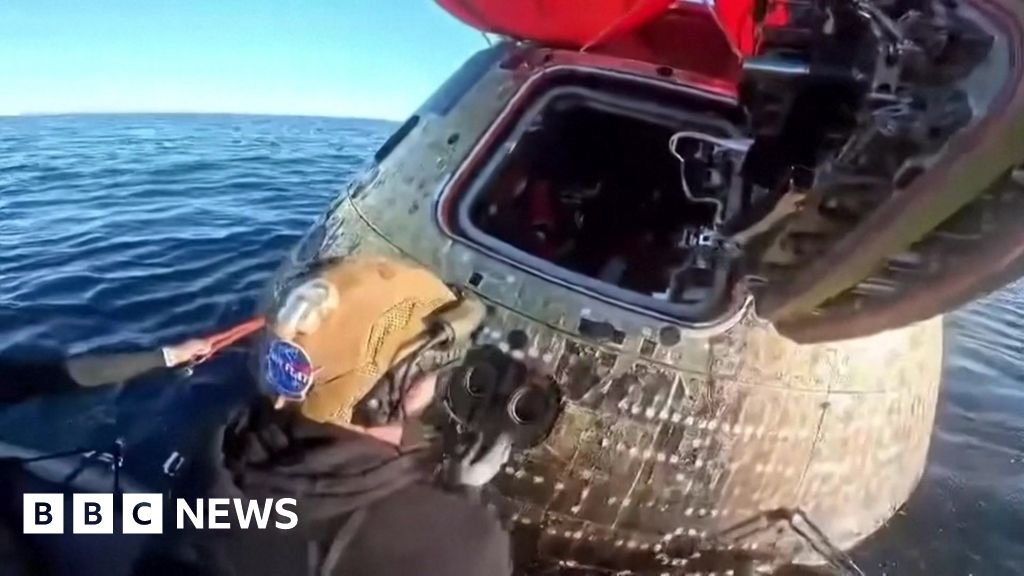
In what can only be described as one of the most triumphant moments in modern space exploration, recently released footage captures the extraordinary reunion between a recovery team and four astronauts who had just completed humanity’s farthest journey from Earth. The video shows the precise moment when the spacecraft’s hatch was opened at sea, revealing Reid Wiseman, Victor Glover, Christina Koch, and Jeremy Hansen safe and sound after their groundbreaking mission.
The emotional scenes that unfolded on April 10th were nothing short of spectacular. As the capsule door swung open, spontaneous cheers erupted from the recovery crew – a raw display of relief and celebration that speaks to the inherent risks and incredible achievements of deep space travel. This wasn’t just another routine return; this was history in the making.
Why This Mission Matters More Than You Think
I believe this achievement represents a pivotal moment that many people are underestimating. While the general public might see this as just another space mission, those of us following the trajectory of human space exploration understand the profound implications. This crew traveled further from our planet than any human being has ever ventured – a record that fundamentally changes our understanding of what’s possible for future lunar and Mars missions.
What strikes me most about this accomplishment is how it demonstrates that we’re no longer in the experimental phase of deep space travel. We’re entering an era where extended journeys beyond Earth’s immediate vicinity are becoming operationally feasible. This isn’t just relevant for space enthusiasts or scientists – it’s a development that should matter to anyone interested in humanity’s long-term survival and expansion.
Who Benefits From This Achievement
The implications of this successful mission extend far beyond the four individuals who made the journey. Future astronauts will benefit from the extensive data collected about human physiology during extended deep space travel. Space agencies worldwide now have concrete evidence that their life support systems and spacecraft designs can handle the extreme conditions encountered at unprecedented distances from Earth.
More importantly, this success validates the enormous financial investments that taxpayers have made in space exploration programs. For those who have questioned whether these missions justify their costs, this achievement provides tangible proof that we’re making genuine progress toward establishing a sustainable human presence beyond Earth.
The Broader Context That Really Matters
What I find particularly significant is how this mission demonstrates the maturation of international space cooperation. The crew’s diverse backgrounds and the seamless coordination of the recovery operation show that space exploration has evolved into a truly collaborative endeavor. This isn’t just about national prestige anymore – it’s about humanity working together to push the boundaries of what we can achieve.
However, I think it’s important to acknowledge that while this mission was undoubtedly successful, it also highlights the enormous challenges that lie ahead. The fact that we’re celebrating a safe return from what is essentially our cosmic backyard puts into perspective just how far we have to go before regular deep space travel becomes routine.
For space industry professionals and investors, this mission provides crucial validation of current technologies and approaches. For the general public, it offers a glimpse into a future where human presence in deep space might become as routine as international air travel is today. The emotional reunion captured in this footage isn’t just a heartwarming moment – it’s a symbol of humanity’s relentless drive to explore and expand our horizons.