Former SpaceX Engineer Launches Startup to Make Satellites Returnable to Earth
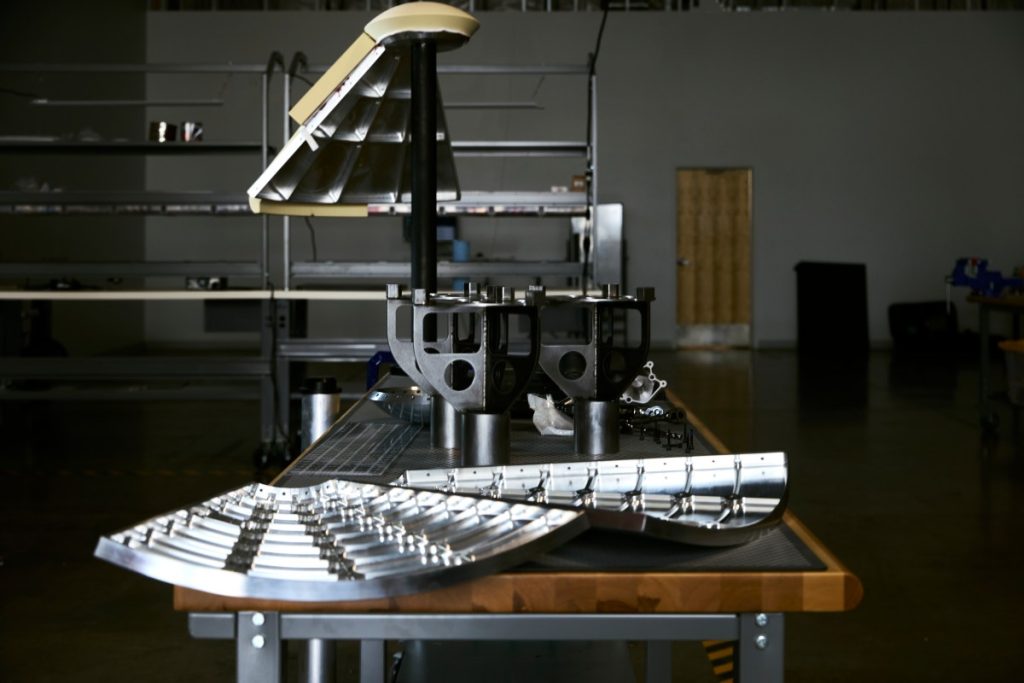
The aerospace industry witnessed a revolution with reusable rockets over the past ten years, and now a former SpaceX engineer aims to bring similar transformation to the satellite sector through returnable spacecraft technology.
Brian Taylor, who previously contributed to satellite development for major constellation projects including Starlink and Amazon’s Project Kuiper, established Lux Aeterna in December 2024. The company focuses on creating satellite platforms equipped with integrated thermal protection systems that enable safe return to Earth while preserving onboard equipment.
After emerging from stealth mode last year, the startup announced securing $10 million in seed funding on Tuesday. Konvoy led the investment round, with additional backing from Decisive Point, Cubit Capital, Wave Function, Space Capital, Dynamo Ventures, and Channel 39. The company chose not to reveal its current valuation.
The funding will advance development of Lux Aeterna’s Delphi spacecraft, which has secured a launch slot aboard a SpaceX vehicle scheduled for early 2027. This demonstration mission will validate the company’s technology by hosting customer payloads and materials that will subsequently return to Earth at Australia’s Koonibba Test Range through a collaboration with Southern Launch aerospace company.
Returning objects from orbit presents significant engineering challenges due to the extreme temperatures generated when spacecraft re-enter Earth’s atmosphere at hypersonic velocities. Traditional thermal protection systems add substantial mass to vehicles, making launches more expensive and typically limiting reentry capabilities to human-rated spacecraft.
This constraint has historically restricted atmospheric reentry to crewed missions, such as the Space Shuttle program or SpaceX’s Dragon capsules. The technical difficulties are evident in SpaceX’s ongoing efforts to successfully land its Starship vehicle, which has faced multiple challenges during reentry attempts.
Several emerging companies are addressing similar challenges on smaller scales. Varda Space and Inversion are developing reentry capsules designed for space-based experiments and sample return missions, with potential applications for rapid cargo delivery. Varda has completed five missions with four successful returns, while Inversion plans to debut its Arc vehicle this year.
Reliable payload return capabilities are essential for various advanced space applications, including orbital materials testing, microgravity manufacturing of pharmaceuticals and electronics, and asteroid mining operations. Military applications include orbital logistics support and hypersonic weapons component testing.
Lux Aeterna envisions a more ambitious application: creating reusable communication and Earth observation satellites. Current satellites typically operate for five to ten years before component failures, fuel depletion, or technological obsolescence render them unusable. They are then either destroyed during atmospheric reentry or moved to disposal orbits.
Taylor described the concept of dynamic upgrade capability, explaining how operators could regularly update satellite components such as processors or imaging equipment by returning spacecraft for refurbishment rather than deploying entirely new satellites while leaving obsolete ones in orbit.
The economic viability of this approach depends on whether the value generated by upgraded payloads exceeds the additional costs of manufacturing, launching, recovering, and refurbishing reusable satellites.
Regulatory hurdles present another challenge. The company chose Australia for its initial operations because obtaining U.S. reentry licenses remains complex. Varda Space experienced significant delays in 2024 while securing Federal Aviation Administration approval for the first commercial spacecraft landing on American soil, with subsequent missions returning to Australian facilities.
Taylor anticipates that regulatory approval timelines will not constrain operations for the next three to four years, expecting the FAA to develop expertise alongside the emerging reentry industry and eventually permit more frequent return operations.
The entrepreneur emphasized that investors support implementing a fundamental shift in orbital operations, extending reusability concepts beyond simple payload return to encompass broader satellite industry applications.